
Best ACT Question Bank: 7 Top Picks for 2026 (Free + Paid)
Miyagi Labs ·
Best ACT Question Bank: 7 Top Picks for 2026 (Free + Paid)

TL;DR
The Enhanced ACT dropped from 215 questions to 131, which means every single question carries more weight. Choosing the best ACT question bank now matters more than ever. For AI-guided, all-in-one prep, Miyagi Labs stands out with its diagnostic-to-exam workflow and 24/7 AI tutor. UWorld wins for pure question-bank drilling with exceptional explanations. Magoosh offers the most questions per dollar, and OnePrep gives you 1,300+ questions completely free. The Official ACT Prep Guide remains essential for anyone who wants genuine retired ACT questions.
Best ACT Question Banks in 2026: Quick Answer
The best ACT question bank depends on your goal. UWorld is designed primarily for intensive question-bank drilling and detailed explanations, Magoosh combines a large practice library with video lessons, OnePrep offers a free ACT practice option, and the Official ACT Prep Guide provides authentic questions from the test maker. Miyagi Labs combines an ACT question bank with diagnostics, targeted problem sets, practice exams, analytics, and AI-powered explanations. For the most realistic preparation, use an official ACT practice test alongside any third-party question bank.
What Is an ACT Question Bank?
An ACT question bank is a searchable collection of practice questions organized by ACT section, topic, skill, or difficulty. Unlike a full-length practice test, a question bank lets students repeatedly drill specific skills and review explanations immediately after answering.
A useful ACT question bank should provide:
Questions that match the current ACT format
English, Math, and Reading practice
Science questions if you plan to take the optional Science section
Difficulty or skill filters
Detailed answer explanations
Progress tracking
Missed-question review
Enough variety to prevent repetitive practice
Practice that reflects the current Enhanced ACT
Question banks are most useful for targeted practice. Full-length official ACT tests are still important for measuring overall performance and getting familiar with the actual testing experience.
How the Enhanced ACT Changed ACT Question Banks
The Enhanced ACT changed the structure that ACT question banks need to replicate. The current core ACT consists of English, Math, and Reading, while Science and Writing are optional. ACT's current section structure lists 50 English questions, 45 Math questions, and 36 Reading questions, with optional 40-question Science and one-essay Writing sections.
Section | Questions | Time | Required? |
|---|---|---|---|
English | 50 | 35 minutes | Yes |
Math | 45 | 50 minutes | Yes |
Reading | 36 | 40 minutes | Yes |
Science | 40 | 40 minutes | Optional |
Writing | 1 essay | 40 minutes | Optional |
For question-bank shoppers, the important point is not simply how many questions a platform contains. The questions should reflect the current ACT structure, pacing, content areas, and answer-choice format.
A large library of outdated ACT questions may be less useful for current preparation than a smaller library that is clearly aligned with the current exam. Students should also use official ACT practice tests to calibrate their performance because ACT provides free official practice resources and full-length practice tests.
What Makes a Good ACT Question Bank?
The number of questions is only one measure of a question bank's usefulness. A strong ACT question bank should make it easy to practice the skills that matter on the current exam and understand why an answer is correct or incorrect.
Look for these characteristics:
1. Current ACT Format
The platform should clearly state that its content has been updated for the current ACT. Older practice material can still be useful for individual skills, but the overall practice experience should match the current exam.
2. Skill-Level Filtering
You should be able to practice specific areas rather than completing random questions every time. Useful filters include ACT section, topic, skill, and difficulty.
3. Detailed Explanations
An answer key tells you what you got wrong. A good explanation tells you why you got it wrong and how to solve a similar question next time.
4. Difficulty Variety
A useful bank should contain easier, medium, and harder questions so you can build skills before moving into more demanding material.
5. Error Review
Look for tools that let you revisit missed or flagged questions. Reviewing mistakes is one of the main reasons to use a question bank instead of simply taking one practice test after another.
6. Progress Tracking
Analytics can help identify recurring weaknesses and show whether your performance is improving over time.
7. Official-Test Calibration
Even the best third-party question bank should be supplemented with official ACT material. ACT provides free practice questions and full-length tests directly through its official prep resources.
8. Sufficient Question Variety
A large question count is useful only when the questions are sufficiently varied. Repeatedly seeing the same question types can create familiarity without necessarily improving your underlying skills.
How We Evaluated the Best ACT Question Banks
We evaluated each ACT question bank using the same core criteria rather than judging platforms solely by the number of questions advertised.
Evaluation factor | What we looked for |
|---|---|
ACT alignment | Whether content reflects the current ACT format |
Question quality | Realistic wording, difficulty, structure, and skill coverage |
Explanations | Whether answers explain the reasoning rather than simply reveal the correct choice |
Targeting | Ability to filter by section, topic, skill, or difficulty |
Analytics | Progress tracking, accuracy data, and performance reporting |
Practice volume | Number and variety of usable questions |
Full-test support | Availability of realistic timed practice tests |
Price/value | Cost relative to access, features, and question volume |
Free access | Whether students can meaningfully practice without paying |
Adaptive or AI features | Whether technology changes practice based on student performance |
How We Handle Product Claims
Question counts, prices, guarantees, trials, and product features can change. Where possible, we verify these details against the provider's current website and identify whether a figure refers to a standalone question bank, a complete prep course, or a bundle.
We also distinguish between official ACT questions and third-party questions. ACT's own preparation resources include authentic ACT tests and official practice materials, making them an important calibration source regardless of which third-party platform a student chooses.
Best ACT Question Banks: Comparison Table
Platform | Best for | Question volume* | Free access | Current ACT alignment | Main strength |
|---|---|---|---|---|---|
Miyagi Labs | AI-guided targeted practice | Thousands | Yes | Yes | Diagnostics + targeted practice + AI explanations |
UWorld | Intensive question drilling | 2,500+ | Trial/access options vary | Yes | Detailed visual explanations |
Magoosh | Budget self-study | Provider-reported library | 7-day trial | Yes | Questions + video lessons |
OnePrep | Free practice | 1,300+ | Yes | Yes | Free topic-filtered practice |
Kaplan | Structured prep | 2,000+ | Free practice available | Yes | Official ACT partnership + course structure |
PrepScholar | Adaptive prep | 3,000+ to 4,000+ depending on product/version | Trial | Yes | Personalized study plan |
Official ACT Prep Guide | Authentic ACT questions | 4 full-length tests | Free official practice also available | Yes | Questions from the test maker |
*Question counts and product features can change. Verify the provider's current product page before purchasing.
Important: Question counts are not directly comparable when platforms define a "question" differently or bundle questions into full-length tests, lessons, or other products.
Which ACT Question Bank Is Best for Your Study Style?
Instead of choosing a question bank solely by total question count, match the platform to what you actually need.
Your priority | Look for |
|---|---|
Free ACT practice | OnePrep or official ACT resources |
Authentic ACT questions | Official ACT Prep Guide |
Detailed explanations | UWorld or another platform with in-depth solutions |
Video instruction | Magoosh or a full prep course |
AI-guided practice | Miyagi Labs or another platform with personalized AI features |
Adaptive study | PrepScholar or another adaptive prep platform |
Structured full-course preparation | Kaplan or PrepScholar |
Targeted weak-skill practice | A platform with topic, skill, and difficulty filters |
Full-length test simulation | Official ACT practice tests plus a third-party platform |
Budget self-study | Free official resources, OnePrep, or lower-cost self-paced options |
The right choice depends on whether your biggest need is authentic questions, targeted drilling, explanations, teaching, personalization, or cost.
Official ACT Questions vs. Third-Party Question Banks
Official ACT questions and third-party question banks serve different purposes.
Official ACT questions are useful for calibration because they come directly from the test maker and reflect the actual exam. ACT currently provides free official practice resources, including full-length practice tests.
Third-party question banks are useful for volume and targeted practice. They can provide more filtering, analytics, explanations, adaptive practice, and repeated practice than a limited set of official tests.
The strongest preparation strategy can therefore combine both:
Official questions → measure and calibrate
Third-party question bank → drill and improve
Official full-length test → reassess
This prevents students from using third-party practice scores as if they were identical to an official ACT score.
1. Miyagi Labs
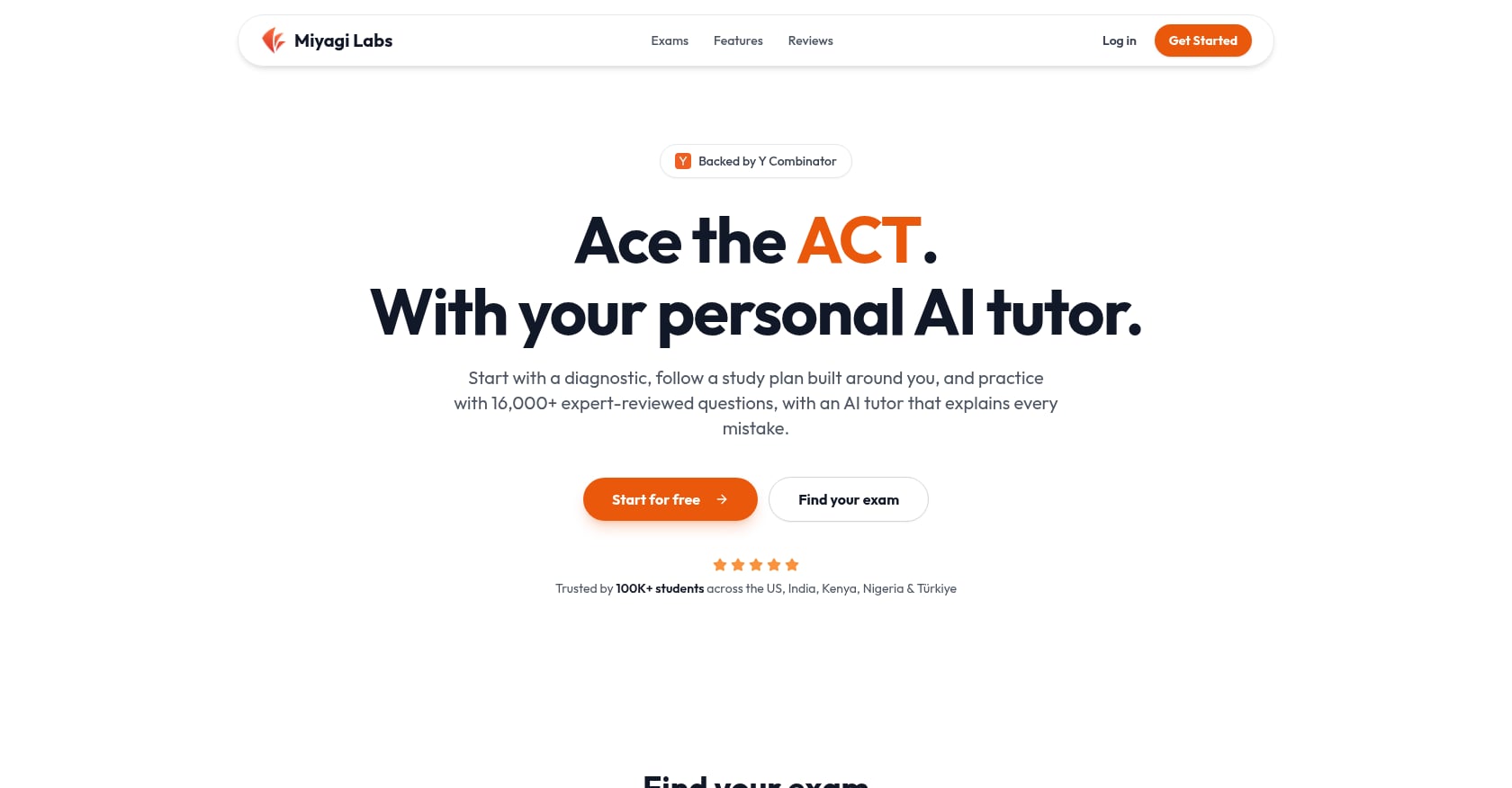
Best for: Students who want an AI-guided system that handles everything from diagnosis to test-day simulation.
Miyagi Labs takes a different approach than most question banks. Instead of handing you a pile of questions and letting you figure it out, it runs you through a complete workflow: diagnostic test, personalized study path, expert-reviewed question bank with filters by domain, skill, and difficulty, full-length timed practice exams, and a 24/7 AI tutor that explains your mistakes in real time.
Key features:
Expert-reviewed question bank with detailed solutions and AI-powered explanations
Filters by domain, skill level, and difficulty so you can target weak areas
Free full-length timed ACT practice exams with section-by-section breakdowns
Score predictor and progress analytics that track improvement over time
Adaptive problem sets and gamification (streaks, achievements) to maintain motivation
Available on iOS, Android, and web
Pricing: Free trial that auto-converts to a paid subscription. iOS in-app purchases at $14.99 and $39.99 for Unlimited Access. No public pricing page on web, which is a drawback for comparison shoppers.
What real users say: On r/ACT, multiple students recommend Miyagi Labs for English and Reading practice specifically. Site testimonials report gains like 27 to 33 (Riley), 25 to 33 (Zo), and 22 to 31 (Daniel). One critical user on Reddit noted that some questions “didn’t seem very accurate,” calling them “AI slop,” though other users in the same threads pushed back on that assessment.
Tradeoffs:
No transparent public pricing page on the web
Smaller review volume compared to established players like Kaplan or UWorld
Some community skepticism about AI-generated question fidelity, though the platform describes its bank as expert-reviewed
Why Miyagi Labs May Be a Good Fit
Miyagi Labs is positioned as more than a standalone ACT question bank. Its current ACT offering combines a score predictor, question bank, targeted problem sets, full-length practice exams, and AI-powered explanations. The platform also allows students to practice English, Math, Reading, and Science and filter practice by category and difficulty.
That makes it particularly relevant for students who want their practice, diagnostics, and review tools in one place rather than using separate resources.
The main consideration is whether you value that broader workflow enough to choose it over a specialized question bank or official ACT materials.
Explore the ACT question bank.
2. UWorld
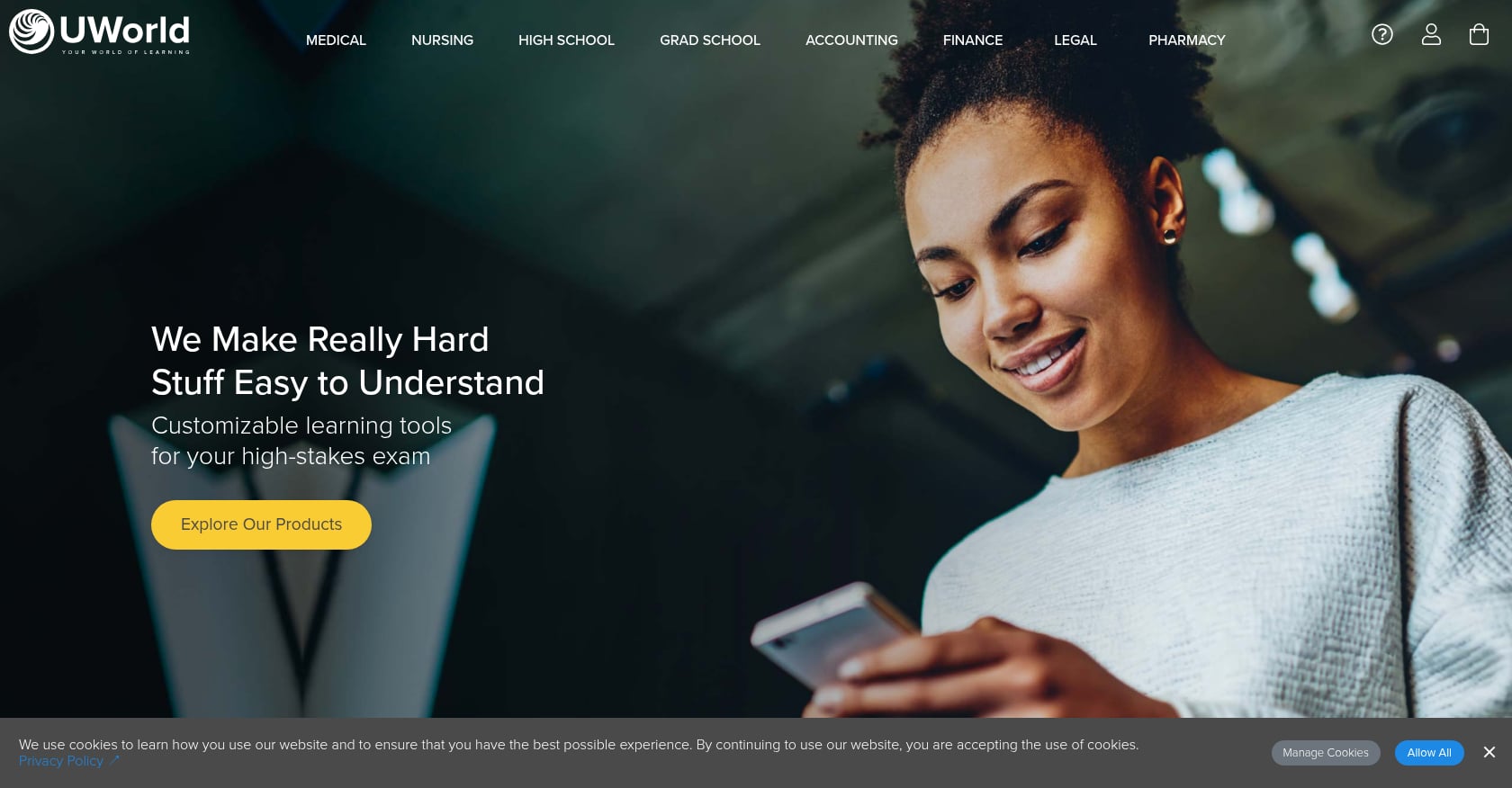
Best for: Students who want the purest, highest-quality standalone question bank with visual explanations.
UWorld built its reputation in medical exam prep, where explanation quality is everything. That DNA carries over to their ACT product. With 2,500+ questions and explanations that often include diagrams and step-by-step visual breakdowns, UWorld is the gold standard for students who already know the content and just need relentless, realistic drilling.
Key features:
2,500+ realistic ACT practice questions plus a full-length practice test
Custom quizzes in tutor mode (immediate feedback) or quiz mode (test simulation)
Detailed text-based answer explanations with visual aids
Performance analytics showing exactly where to improve
Pricing: QBank-only plans range from $99 to $249 depending on access length (30, 90, 180, or 360 days). The full ACT Prep Course costs $299 for 30 days or $449 for 360 days. Prices climb fast if you need longer access.
What real users say: On Reddit, UWorld consistently gets the strongest praise for explanation quality. One student wrote: “I got a 35 from studying using UWorld, it has the best question bank along with the most informative explanations.” Another reported: “I only used UWorld for my ACT math prep but it brought my score from a 31 to a 35.” Multiple users note that UWorld questions run harder than the real ACT, which can be discouraging but arguably better preparation.
Tradeoffs:
No video lessons or guided curriculum of any kind
Text-only explanations (no video walkthroughs)
Starting at $99, it’s not cheap for just a question bank
Questions can feel harder than the actual test, which frustrates some students
3. Magoosh
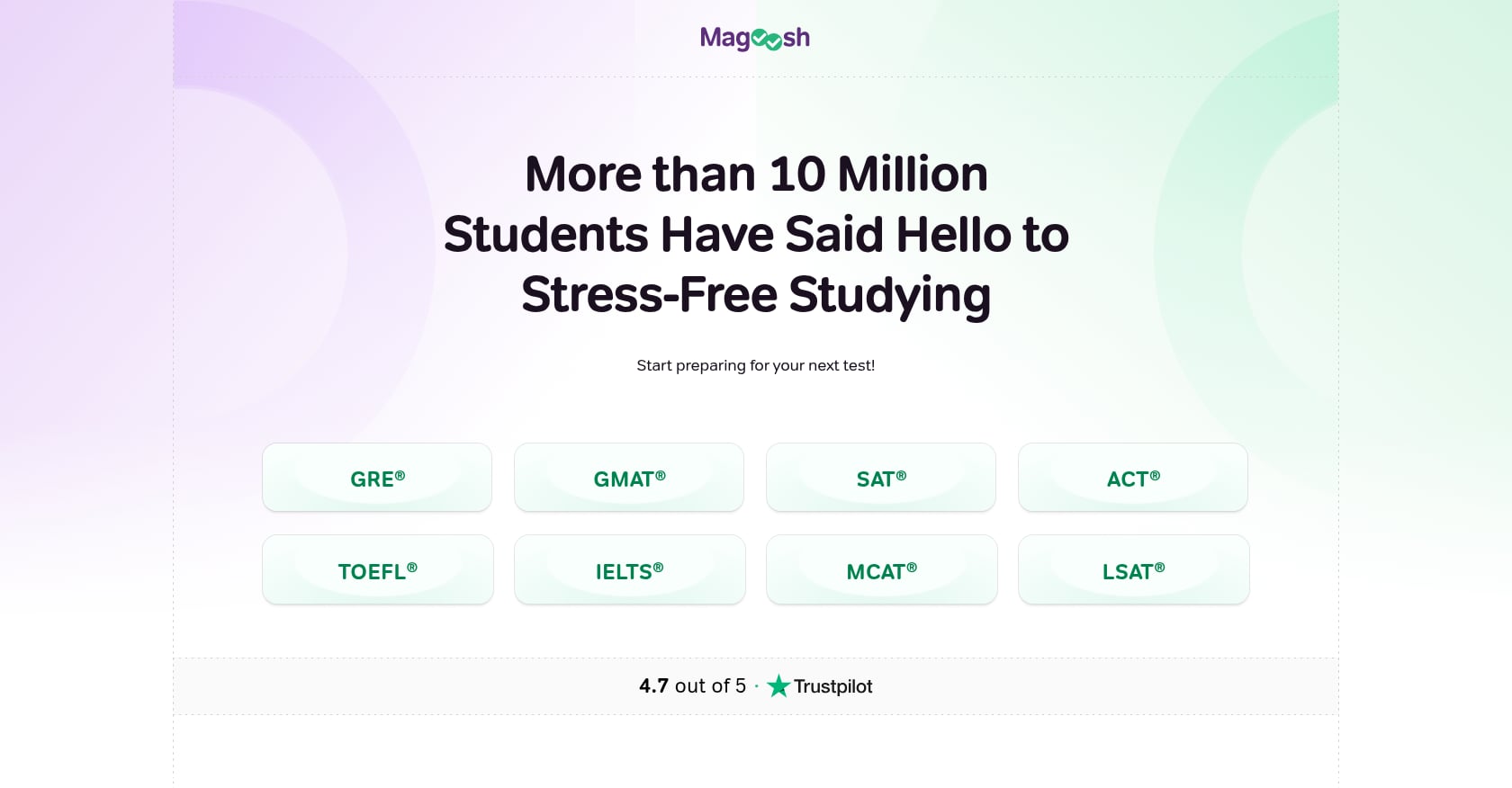
Best for: Budget-conscious, self-motivated students who want the most questions per dollar with video explanations.
Magoosh packs a lot into a low price point. At $129 for a full year of access, you get 3,300+ practice questions (each with both video and text explanations), 250+ video lessons, and 11 full-length practice tests. For students scoring 30 or below, Magoosh offers a +4 point score improvement guarantee. That’s a meaningful commitment from a prep company.
Key features:
3,300+ practice questions, each with video and text explanation
250+ video lessons covering all ACT content
11 full-length practice tests
+4 point score improvement guarantee for students at or below 30
7-day free trial
4.7-star average rating from nearly 500 reviews
Pricing: $129 for 12 months of self-paced study (or four payments of $32.25). Live classes available for $399.
What real users say: Magoosh earns strong marks for value. Reviewers consistently praise the video explanations and the sheer volume of material. The main criticism is that lessons aren’t tailored to your specific level. Despite a diagnostic test identifying your strengths and weaknesses, the platform encourages you to go through all lessons regardless.
Tradeoffs:
No adaptive learning; everyone gets the same lesson sequence
No live tutoring in the base plan
Some questions reportedly run harder than the real ACT
The 7-day trial is short for evaluating 3,300+ questions
4. OnePrep
Best for: Students who want a substantial free question bank with topic-level filtering and instant explanations.
OnePrep offers something rare: a genuinely free library of 1,300+ ACT practice questions covering English, Math, Reading, and Science. You can filter by topic and difficulty, get instant answer explanations, and track your progress without paying a cent. The platform is updated for the 2026 Enhanced ACT.
Key features:
1,300+ free ACT practice questions
Topic and difficulty filtering
Instant AI-powered explanations
Progress tracking and analytics
Enhanced ACT aligned
Pricing: The core question bank is free with instant explanations. Paid plans are available for additional features, though ACT-specific pricing isn’t fully detailed in public listings.
What real users say: Users report that “the practice tests feel accurate, even slightly harder than the official ones. The pacing practice made test day much less stressful.”
Tradeoffs:
Primarily an SAT-focused brand; ACT content is newer and less battle-tested
Smaller total question volume than UWorld or Magoosh
Less community discussion and fewer reviews compared to established players
5. Kaplan
Best for: Students who want structured lessons from an official ACT partner with live class options.
Kaplan is the only prep company that partners directly with the ACT test maker. That partnership is a real trust signal, giving Kaplan access to content and insights that independent companies don’t have. If you want a full course with video lessons, a question bank, and the option to join live classes, Kaplan covers those bases.
Key features:
2,000+ online practice questions
3 full-length ACT practice tests (On Demand) with additional tests in higher tiers
Video lessons and structured curriculum
Official ACT partnership for up-to-date content
Average 4-point score improvement among “highly engaged” Live Online students (per Kaplan’s 2023 efficacy study reviewing 1,006 students)
Pricing: Self-paced course starts at approximately $119 for 6-month access. On Demand packages run around $180. Live Online classes are approximately $650. Private tutoring packages can exceed $1,300.
What real users say: Opinions are mixed on question difficulty. Some find Kaplan’s tests too hard, others too easy compared to the actual ACT. The biggest complaint is the 6-month access cap on On Demand, with no option to extend.
Tradeoffs:
Online question bank is smaller than UWorld, Magoosh, or PrepScholar
6-month access limit on the self-paced course
Interface feels dated according to some reviews
Live classes and tutoring push costs significantly higher
6. PrepScholar
Best for: Students who want adaptive, curriculum-driven prep that adjusts lesson by lesson to their performance.
PrepScholar offers the largest question bank on this list at 4,300+ questions, and the platform has been fully redesigned for the Enhanced ACT. Its adaptive technology adjusts the difficulty and focus of each lesson based on how you perform, which mimics how a good private tutor would pace your study.
Key features:
4,300+ practice questions
Adaptive lesson-by-lesson technology
Fully redesigned for Enhanced ACT
Score improvement guarantee
5-day free trial
Pricing: $397 for the self-paced Complete ACT plan. Group classes jump to $895. Tutoring packages range from $995 to $6,995.
What real users say: Students praise the depth and quality of explanations, with one reviewer noting that “PrepScholar’s deep question bank, both in terms of quality and quantity, is hands-down superior to Princeton Review’s.” The main complaint is question recycling. Students in extended study periods report seeing the same questions repeatedly, which reduces effectiveness over time.
Tradeoffs:
Expensive at $397 for self-paced, with no standalone question bank option
Reported question recycling during longer study periods
Tutoring add-ons push costs very high
No free tier beyond the 5-day trial
7. Official ACT Prep Guide 2026-2027
Best for: Every ACT student as a non-negotiable baseline for calibrating with real retired questions.
This is the only source of genuine, retired ACT questions written by the actual test makers. No third-party question bank, no matter how good, can fully replicate the subtle patterns and quirks of real ACT questions. The 2026-2027 edition includes four authentic ACT tests (with the optional writing section), making it essential for final-stage calibration.
Key features:
4 authentic ACT tests (approximately 860 total questions)
Written by the people who write the real test
Available in print and online format
Updated for the Enhanced ACT
Pricing: Approximately $37.23 for the paperback with online access. Related print options include Barron’s 7 Practice Tests ($20.89) and Kaplan Total Prep 2026 ($26.99).
Tradeoffs:
Limited question volume (4 tests only)
No adaptive features, analytics, or personalized feedback
Static resource with no AI explanations
Not sufficient as a standalone prep tool
How to use it: Pair this book with a digital question bank. Use the Official Guide for realistic test simulations and calibration, then use your digital platform for targeted practice on weak areas. If you’re building targeted ACT problem sets around specific skills, a digital platform gives you the filtering and analytics that a print book can’t.
Honorable Mention: Khan Academy (It Doesn’t Cover the ACT)
This needs to be said clearly because it’s one of the most common misconceptions in test prep: Khan Academy does not offer ACT-specific practice tests, courses, or prep materials. Their test prep partnership is exclusively with College Board for the SAT.
You can use Khan Academy for general math and grammar skill-building, which will indirectly help your ACT performance. But for ACT-format practice with proper timing, question structure, and scoring, you need a different resource.
One ACT tutor with over a decade of experience noted this is “one of the most common points of confusion I hear from students and parents.” If you’ve been assuming Khan Academy has you covered for the ACT, it’s time to explore actual ACT prep tools. For a detailed breakdown of what Khan does and doesn’t offer, check out this Miyagi vs Khan Academy comparison.
How to Choose the Right ACT Question Bank for You
The best ACT question bank depends on your study style, budget, timeline, and score target. Here’s a quick decision framework:
If you’re a self-directed learner on a budget: Magoosh ($129/year) or OnePrep (free) give you the most questions for the least money. Pair either with the Official ACT Prep Guide for calibration.
If you want AI-powered guidance and don’t want to build your own study plan: Miyagi Labs handles the diagnostic-to-test-day workflow for you, with a 24/7 AI tutor and adaptive ACT practice that adjusts to your performance.
If you already know the content and just need to drill: UWorld’s explanation quality is unmatched for pure question-bank work.
If you need content teaching alongside practice: Kaplan or PrepScholar provide structured lessons. Kaplan adds the credibility of an official ACT partnership.
If you’re still deciding between the SAT and ACT: Take a diagnostic on both and compare. Miyagi Labs offers both an ACT prep experience and an SAT question bank, which makes it easy to evaluate both tests on the same platform.
Whatever you choose, use the “diagnose, drill, test, review” loop. Improvement comes from a short cycle: figure out what’s weak, learn the concept, drill targeted questions, take a timed section, and review every mistake. The best question banks embed this loop into the product. The rest leave it up to you.
Frequently Asked Questions
How many ACT practice questions should I complete before test day?
There’s no magic number, but most students who see significant score gains work through 500 to 1,500 targeted questions over 6 to 12 weeks. Quality matters more than quantity. Focus on questions in your weakest areas and review every explanation, even for questions you got right.
Can I combine multiple ACT question banks?
Absolutely. Many high-scoring students use a primary digital platform for daily practice and the Official ACT Prep Guide for weekend test simulations. The key is consistency, not exclusivity. Just avoid bouncing between three or four platforms without finishing any of them.
Is the Science section still on the ACT?
Science is now optional. It doesn’t count toward your Composite score, and the core ACT costs $68 without it. Adding the optional Science section costs just $4 more. Some colleges may still want to see a Science score, so check requirements for your target schools before deciding.
Are AI-generated ACT questions reliable?
It depends on the platform. Practitioners on r/ACT report mixed experiences. Some AI-curated question banks feel realistic, while others miss the nuance of actual ACT questions. The safest bet is a platform that describes its questions as expert-reviewed rather than purely AI-generated, and that supplements its bank with real test data.
What’s the difference between a question bank and a full prep course?
A question bank gives you practice questions with explanations. A full prep course adds lessons, study plans, diagnostics, and sometimes tutoring. If you already understand the content and just need practice, a standalone question bank works. If you have content gaps, a course that combines teaching with practice will serve you better.
Why are some ACT question banks harder than the real test?
Many platforms intentionally make questions slightly harder to build stamina and reduce anxiety on test day. UWorld and OnePrep users both report this. It’s a valid strategy, but it can be discouraging if you don’t know it’s happening. Always calibrate with official practice tests to get an accurate score estimate.
Is the Official ACT Prep Guide enough by itself?
No. Four practice tests (roughly 860 questions) won’t give you enough volume for targeted skill improvement. The Official Guide is essential for calibration, but you need a digital question bank alongside it for the focused, repeatable practice that drives score gains.
Do I need to prep for the optional Science section?
Only if your target colleges require or recommend it. Since Science no longer affects your Composite score, most students are better off investing that study time into English, Math, or Reading. If you do want to prep for Science, make sure your question bank includes it. Platforms like OnePrep, Kaplan, and the Official ACT Guide all cover Science content.