
SAT Study Schedule 2026: 1, 3, and 6-Month Guide
Miyagi Labs ·
SAT Study Schedule 2026: 1, 3, and 6-Month Guide

TL;DR
An SAT study schedule maps every prep activity (diagnostics, content review, practice tests, and error analysis) to specific days and times across a set timeline. College Board data shows that just 20 hours of structured practice is associated with a 115-point score gain. The best schedules start with a diagnostic test, calculate the hours needed to close your score gap, and cycle between content work, timed exams, and mistake review. Whether you have six months or one month, a concrete schedule beats studying “whenever you feel like it” every time.
Quick Answer
The best SAT study schedule depends on how much your current score differs from your goal score.
- 6 months: Best for beginners or students aiming to improve by 200+ points (3–5 hours per week).
- 3 months: Ideal for most students seeking a 100–200 point increase (5–8 hours per week).
- 1 month: Best for experienced test takers or retakes needing under 100 points (8–12 hours per week).
Every effective schedule follows the same pattern:
1. Take a diagnostic test.
2. Set a target score.
3. Calculate total study hours.
4. Schedule consistent weekly sessions.
5. Alternate between learning, practice tests, and error review.
6. Reduce workload during the final days before the exam.
The most important predictor of improvement is not total study time—it is consistently reviewing mistakes after every practice session.
Goal | Recommended Timeline | Weekly Hours | Practice Tests |
|---|---|---|---|
Improve 50 points | 1 month | 5–6 hrs | Weekly |
Improve 100 points | 2–3 months | 5–8 hrs | Every 2 weeks |
Improve 150 points | 3–4 months | 6–9 hrs | Every 2 weeks |
Improve 200+ points | 6 months | 3–5 hrs | Every 3 weeks |
What Is an SAT Study Schedule?
An SAT study schedule is a detailed calendar that specifies when and what you will study over a defined period of time. It assigns each prep activity, from your first diagnostic test through your final review session, to specific days and time blocks across weeks or months.
Think of it as the execution layer of your preparation. It answers the question most students struggle with: “What should I be doing today?”
A quick distinction worth making. A study plan defines what you need to learn: your content gaps, target skills, and priority areas. A study schedule defines when you will do each of those things. The plan is strategy. The schedule is logistics. You need both, but the schedule is what keeps you accountable day to day.
The shift to the Digital SAT makes scheduling even more important. The test now runs 2 hours and 14 minutes with 98 questions across two adaptive modules per section. Because each module adjusts difficulty based on your first-module performance, your schedule should include pacing drills, not just content review. Rushing through Module 1 can lower Module 2’s difficulty ceiling and cap your score.
Start with a free diagnostic to find out where you stand before building your schedule.
Who This SAT Study Schedule Is For
This guide is designed for:
First-time SAT test takers
Students retaking the SAT
High school sophomores and juniors planning ahead
Seniors preparing for their final SAT attempt
Students balancing school, sports, jobs, and extracurricular activities
Homeschooled students creating independent study plans
If you fall into any of these groups, choosing the correct study timeline can significantly improve your chances of reaching your target score.
Why You Need an SAT Study Schedule
A growing number of selective colleges have reinstated standardized test requirements, including MIT, Harvard, Yale, Stanford, Brown, Dartmouth, Cornell, Caltech, and the University of Texas at Austin. For the Class of 2025, over two million students took the SAT, with a mean total score of 1029. A score of 1350 or above puts you in roughly the top 10% of test takers. These numbers make structured prep more consequential than it has been in years.
The data on structured study time is clear. According to College Board research, just 6 to 8 hours of study with Official SAT Practice is associated with a 90-point score increase. Twenty hours is associated with a 115-point gain. And more than 16,000 students from the class of 2017 who used Official SAT Practice on Khan Academy improved their scores by over 200 points.
But here is the part that matters most: the main factor is not how much time you study. It is how well you spend that time. Practitioners on Reddit and tutor blogs consistently repeat this point. A smart 3-to-6-month schedule beats a frantic cram session every time. Studying without structure leads to the three biggest mistakes students make: covering material they already know, skipping error review, and cramming the final week.
A schedule prevents all three.
Key Components of Every SAT Study Schedule
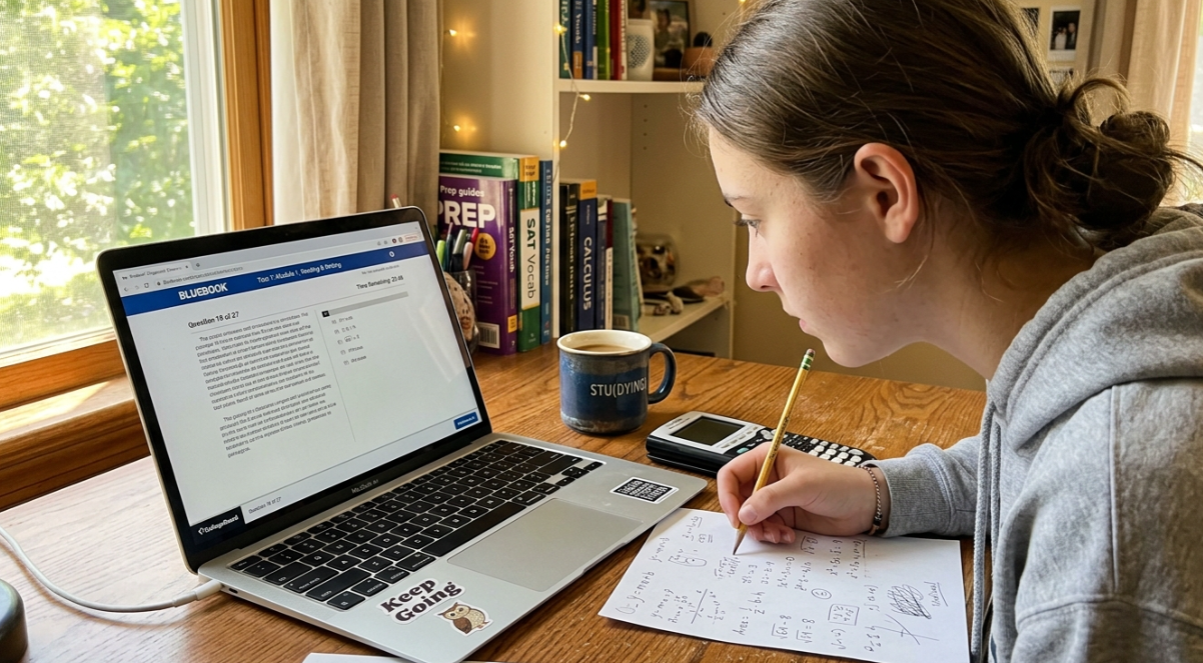
Every effective SAT study schedule contains the same core building blocks, regardless of whether you have six months or six weeks.
1. Start with a Diagnostic Test
You cannot build a targeted schedule without knowing your starting point. Skip the diagnostic and you are guessing at what to study. Take one and you turn “study everything” into “fix these two or three specific things.”
This is not just tutor advice. It is near-universal consensus across r/Sat, College Board’s own guidance, and every prep company that ranks for this topic. The first entry on your schedule should always be a cold, timed diagnostic.
2. Set a Goal Score
Look up the 25th-to-75th percentile SAT ranges for your target schools. Your goal score should sit at or above the 50th percentile for your most competitive school. This gives you a concrete number to work toward rather than a vague ambition to “do well.”
A score predictor can help you estimate where you will land based on your current performance and study trajectory.
3. Calculate the Hours You Need
Work backward from the gap between your diagnostic score and your goal score. Historical data gives us useful benchmarks:
Score Improvement Needed | Estimated Study Hours |
|---|---|
0 to 50 points | 10 to 20 hours |
50 to 100 points | 40 to 60 hours |
100 to 200 points | 80 to 120 hours |
200+ points | 150+ hours |
Sources: ScoreSmart, PrepScholar (which recommends about 80 hours for a 200-point gain)
Once you have your total hours, divide by the number of weeks until test day. That gives you your weekly study commitment.
4. Block Your Weekly Sessions
Many students say they will “study 5 hours a week” but never specify when. That is not a schedule. It is a hope.
Pick your days and times in advance. If you commit to Tuesday and Thursday evenings plus Saturday morning, treat those slots with the same seriousness as a class or a job. Research on session length suggests that sessions under 30 minutes rarely build depth, while sessions over two hours often lead to fatigue and careless errors. The sweet spot for most students is 45 to 90 minutes per session.
5. Cycle Between Three Activity Types
Your schedule should rotate among three kinds of work:
Content days. Targeted skill work on your weakest areas. If your diagnostic shows you are losing points on algebra and evidence-based reading, those topics get the most calendar space. Drill SAT problem sets that isolate the specific skills you need.
Practice test days. Full-length, timed exams taken under realistic conditions. College Board recommends spacing these out by at least two weeks when your schedule allows. Most students benefit from four to six total full-length exams across their entire prep period.
Review days. This is the activity that separates students who improve from students who plateau. Go through every wrong answer. Write down what you missed and why. Keep an error log (even a simple spreadsheet works). Practitioners on Reddit are emphatic about this: multiple threads on r/Sat highlight that error analysis is where the real improvement happens, not just taking more tests.
6. Taper Before Test Day
Reduce your study hours slightly in the last two to three days before the SAT. New practice tests will not create new skills in 48 hours, but they can create stress. Light review, early sleep, and a calm morning are worth more than a last-minute cram session.
How Many Total Hours Should You Study for the SAT?
The number of hours you need depends primarily on your target score increase.
Score Increase | Suggested Hours |
|---|---|
0–50 points | 10–20 |
50–100 points | 40–60 |
100–200 points | 80–120 |
200+ points | 150+ |
These estimates assume consistent practice with official SAT materials and regular error review. Students who skip reviewing mistakes often require significantly more study time to reach the same score improvement.
SAT Study Schedule by Timeline
Not every student has the same amount of time. Here is what each common timeline looks like and who it works best for.
Timeline | Best For | Weekly Hours | Practice Tests |
|---|---|---|---|
6 months | Students starting from scratch or targeting a 200+ point gain | 3 to 5 hours | 1 every 3 weeks |
3 months | Most common timeline; students with a baseline who need 100 to 200 points | 5 to 8 hours | 1 every 2 weeks |
1 month | Retakers or students needing fewer than 100 points of improvement | 8 to 12 hours | 1 per week |
2 weeks | Final polish only; not recommended for first-time takers | 10 to 15 hours | 1 to 2 total |
The one-month plan deserves a warning. It is best suited for students who have already taken the SAT and need a focused refresh. If you have never taken the test, one month is almost certainly not enough to build and retain skills. Knowledge gained through cramming is shallow and fragile, and it tends to collapse under the fatigue and stress of test day.
One more timing detail that catches students off guard: booking your next test date four weeks after your first sitting often feels productive, but it is usually a mistake. You will not have your first score back for about two weeks, leaving only two weeks to actually study based on what you got wrong. Tutors and prep advisors generally recommend an 8-to-12-week gap between sittings.
Take a free practice exam to establish your baseline before choosing a timeline.
Sample Weekly SAT Study Schedule
A weekly schedule provides enough structure while leaving flexibility for school and extracurricular activities.
Day | Focus | Time |
|---|---|---|
Monday | SAT Math Review | 60 min |
Tuesday | Reading & Writing | 60 min |
Wednesday | Rest or Vocabulary | 30 min |
Thursday | Mixed Practice Questions | 75 min |
Friday | Error Log Review | 45 min |
Saturday | Full-Length Practice Test | 2 hr 14 min |
Sunday | Practice Test Review | 90 min |
Repeating a predictable weekly routine helps students build study habits and reduces procrastination.
How Often Should You Take Practice Tests?
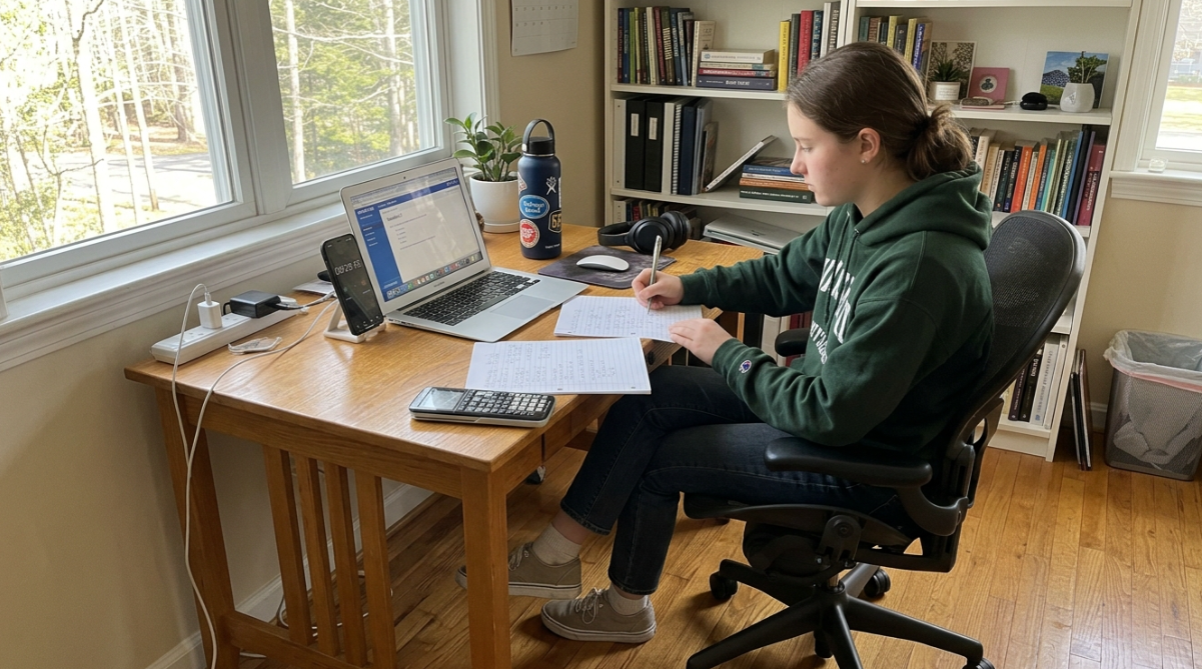
Practice tests are the backbone of SAT prep, but more is not always better.
College Board’s recommendation is to space full-length tests by at least two weeks. Most test prep experts suggest four to six total exams across your entire preparation, typically every two to three weeks. Weekly practice tests can work during the final three or four weeks if you already have solid content knowledge, but they are counterproductive earlier in your prep when you are still learning foundational skills.
Here is the rule that should govern your practice test cadence: do not take another practice test until you have thoroughly reviewed the last one. Call it the “review gate.” Every wrong answer on a practice test is a data point about what you need to study. If you skip the review and jump straight into another test, you are just collecting data you will never use.
Students on r/Sat report this as one of the most common failure modes: “I took a bunch of practice tests but never reviewed them.” The students who report the biggest gains almost always mention detailed error analysis as the thing that actually moved their scores.
For daily practice between full tests, targeted SAT practice questions focused on your weak areas are more productive than another timed exam.
How to Stay Consistent With Your SAT Study Schedule
Many students struggle not because the material is difficult, but because they stop following their schedule.
Strategies that improve consistency include:
Study at the same time every week.
Turn off phone notifications during sessions.
Track completed study hours.
Review your error log every weekend.
Set small weekly score goals.
Reward yourself after completing major milestones.
Consistency beats intensity. Four productive one-hour sessions each week are generally more effective than one six-hour cram session.
Common SAT Study Schedule Mistakes
Studying Without a Diagnostic First
This wastes time on areas where you are already strong. The students on r/Sat who report the biggest improvements consistently describe the same approach: take a diagnostic cold, identify two or three weak areas, and drill them ruthlessly rather than trying to cover everything equally.
Only Taking Practice Tests, Never Reviewing Them
Practice tests without error review is like going to the doctor for bloodwork and never reading the results. The test tells you what is wrong. The review is the treatment.
Cramming in the Final Week
A common instinct, and almost always counterproductive. The last few days before the SAT should be light review, not new material. You are better off sleeping well and arriving calm than squeezing in one more practice test at midnight.
Focusing Only on Strong Areas
It feels good to practice things you are already good at. It does not raise your score. The points are hiding in your weak sections. If you hate reading comprehension, that is probably where your biggest gains live.
Studying Only When Motivated
Motivation is unreliable. A schedule is not. Students who study only when they feel like it end up with inconsistent preparation and uneven coverage. The whole point of a schedule is to remove the decision about whether to study today. The answer is always yes, because it is on the calendar.
Tools That Help You Build and Follow an SAT Study Schedule
You do not need expensive software to build a study schedule. A Google Calendar and a spreadsheet for error logging will get you far. But some tools make the process faster and more personalized.
Official Bluebook app (free). College Board’s own practice platform. It simulates the actual Digital SAT interface and provides full-length practice tests. Essential for getting comfortable with the adaptive format.
Khan Academy (free). Personalized practice recommendations based on your performance. The College Board partnership makes it a natural complement to Bluebook.
AI-powered platforms. Tools that generate adaptive study paths based on your diagnostic results can save significant planning time. They adjust as you improve, keeping your schedule focused on whatever needs the most attention. Browse SAT resources for options that include diagnostics, AI tutoring, and progress tracking in one place.
Error log template. A simple spreadsheet with columns for date, question type, what you got wrong, and why. Review it weekly. This is the single most underused tool in SAT prep.
Frequently Asked Questions
How many hours a week should I study for the SAT?
It depends on your score gap and timeline. Students aiming for a 100-to-200-point improvement over three months typically need 5 to 8 hours per week. Those with a smaller gap or longer timeline can get by with 3 to 5 hours. The key is consistency: four sessions of 75 minutes will do more than one eight-hour marathon.
Is a one-month SAT study schedule enough?
For retakers who already have a solid foundation and need fewer than 100 points of improvement, yes. For first-time test takers or anyone targeting a large score gain, one month is not enough. You will not have time to learn, practice, and retain new skills before they erode under test-day pressure.
Should I study before taking a diagnostic test?
No. The entire purpose of a diagnostic is to reveal your actual starting point. Studying beforehand defeats that purpose. Take it cold, accept whatever score you get, and use it to build a schedule that targets your real weaknesses.
How do I adjust my schedule if I am not improving?
First, check whether you are actually reviewing your mistakes or just taking more tests. If your error log shows the same question types appearing repeatedly, you need to change how you are studying those topics, not just how much. Consider switching resources, trying a different explanation style, or focusing on fewer skills at a time. If you have been self-studying for several weeks without progress, outside feedback from a tutor or AI tutor can help identify blind spots.
How do I fit SAT prep around school, sports, and extracurriculars?
Block your study sessions at times that are already open and repeatable. Many students use weekday evenings (45 to 60 minutes) and a longer weekend session (90 minutes to 2 hours). Protect those blocks the way you would protect practice or rehearsal. The total hours matter less than the consistency.
What should I study first: Math or Reading and Writing?
Start with whichever section has the bigger gap between your current performance and your goal. If both are equally weak, many tutors recommend beginning with Math because the concepts are more concrete and progress tends to be more immediately visible, which builds confidence.
When should I start my SAT study schedule?
Three months before your test date is the most common and effective starting point for most students. Six months gives even more breathing room if you are starting from scratch. Starting earlier means lower weekly time commitments and less stress.
Building a study schedule is the single most practical thing you can do to turn SAT prep from an overwhelming project into a manageable routine. The formula is straightforward: diagnostic first, goal score second, hours calculated third, sessions blocked fourth, and consistent review throughout.
Start learning with a free diagnostic and personalized study path to put your schedule into action today.