
10 Best ACT Prep Resources in 2026 (Free, Paid, AI)
Miyagi Labs ·
10 Best ACT Prep Resources in 2026 (Free, Paid, AI)

TL;DR
The best ACT prep resources for 2026 start with official ACT practice tests for a diagnostic baseline, then add one guided platform to turn weak spots into a study plan. Miyagi Labs is the strongest all-in-one AI-guided option, combining a diagnostic, personalized study path, question bank, AI tutor, and full-length practice in a single workflow. UWorld is the best standalone question bank for drilling. Most students need one primary resource plus official tests, not five platforms running at once.
The Enhanced ACT is now the standard national test. If you are prepping with old materials or outdated advice, you are solving the wrong problem.
Here is what changed: the required ACT sections are English (50 questions, 35 minutes), Math (45 questions, 50 minutes), and Reading (36 questions, 40 minutes). Science and Writing are now optional. The composite score uses only English, Math, and Reading. Science still matters for certain colleges or STEM reporting, but it no longer drives your composite.
This shift changes which ACT prep resources are worth your time. Old four-section study plans, Science-heavy strategies, and pre-2025 practice books no longer map cleanly to the test you will actually take. For a complete breakdown of the current structure, see this guide to ACT format and sections.
The best ACT prep resources share a few traits: they use current-format questions, they explain why you missed (not just what you missed), and they help you practice under real timing. Below is a comparison of every major option, with pricing, tradeoffs, and real student feedback so you can build the right study stack for your score goal and budget.
At-a-Glance: Best ACT Prep Resources Compared
| Resource | Starting Price | Best For | Key Differentiator | Main Tradeoff |
|---|---|---|---|---|
| Miyagi Labs | Free trial; from $14.99 | All-in-one AI-guided prep | Diagnostic, personalized path, AI tutor, analytics | Newer brand; public pricing not fully published |
| ACT.org Free Practice | Free (guide ~$24) | Official baseline and diagnostics | Real questions from the test maker | No guided instruction or study plan |
| UWorld ACT | ~$99 | Paid question bank drilling | Visual step-by-step explanations | No live teacher or built-in schedule |
| Magoosh ACT | ~$129 | Budget paid video course | Video lessons, mobile-friendly, low cost | Question fidelity debated by students |
| Kaplan ACT | $179–$849 | Official-partner course | ACT/Kaplan partnership | Expensive for full options |
| PrepScholar ACT | $397–$995 | Structured weekly plan | Diagnostic-built adaptive schedule | Higher price; guided path can feel rigid |
| Princeton Review | Varies; free trial | Legacy brand supplement | Broad strategy coverage | Enhanced ACT editions have complaints |
| Khan Academy + Critical Reader | Free | Free content review | Math/grammar concept refreshers | Not official ACT prep |
| Varsity Tutors | Free | Free extra practice | Free diagnostics and flashcards | Variable question quality |
| Error Log + Timer | Free | Improvement multiplier | Forces systematic mistake review | Requires real discipline |
How to Choose the Best ACT Prep Resource
Most best ACT prep resources lists rank tools by popularity. That is the wrong frame. The right resource depends on your bottleneck, not a brand name.
Start with an Official Diagnostic
Before spending money on any prep tool, take one official ACT practice test. ACT.org offers free official practice tests with real questions, timed or untimed options, digital and paper formats, section practice, daily questions, and study guides.
Practitioners on Reddit consistently give this same advice. In threads about Enhanced ACT resources for 2026-27, the dominant recommendation is to start with official ACT materials because newer third-party resources may not fully reflect the current format. One commenter put it simply: official material is the safest choice until third-party publishers catch up.
A diagnostic tells you three things: your overall score range, your weakest required section, and whether your problem is content knowledge or pacing. Without that information, every dollar spent on prep is a guess.
Match the Resource to Your Bottleneck
| Your Bottleneck | Symptoms | Best Resource Type |
|---|---|---|
| No idea where to start | “I have a test date but no plan” | Diagnostic + guided AI study path |
| Pacing | Unfinished sections, rushed guessing | Timed drills, full-length practice tests |
| Content gaps | Missing untimed questions too | Video lessons, subject review, Khan Academy |
| Question-type weakness | Same grammar or math patterns missed | Filtered question bank + error log |
| Poor review quality | Taking tests but not improving | AI tutor or detailed explanations + wrong-answer journal |
| Accountability | Knows what to do but doesn’t follow through | Live class, tutor, scheduled study plan |
| Near-perfect goal (32+) | Inconsistent on high-difficulty questions | Official tests, high-fidelity drilling |
For help building a structured timeline around your weak areas, this step-by-step ACT study plan walks through weekly schedules for different prep windows.
Stop Confusing Activity with Progress
Five platforms do not equal a plan. One well-chosen resource, combined with official practice tests and a habit of reviewing every wrong answer, will beat a scattered approach every time.
If a resource does not tell you what to do after you miss a question, it is not really a prep system. It is just a pile of questions.
The 10 Best ACT Prep Resources in 2026
1. Miyagi Labs
Best for: Students who want one guided platform instead of juggling multiple tools.
Miyagi Labs is the best all-in-one AI-guided ACT prep resource for students who need a diagnostic, personalized study path, practice with explanations, and score tracking in a single workflow. It is strongest for students who need structure and fast feedback without paying private-tutor prices.
Pricing:
- Free trial and free full-length ACT practice tests
- iOS in-app purchases for Unlimited Access at $14.99 and $39.99
- Web subscriptions available monthly or annually (check current pricing before subscribing, as Miyagi’s public pricing matrix is not fully published)
Key features:
- Diagnostic test that identifies your weakest areas
- Personalized study path built from diagnostic results
- Expert-reviewed question bank with detailed solutions
- Full-length digital ACT practice exams under real timing
- 24/7 AI tutor for on-demand explanations
- Score predictor and section-by-section analytics
- Mobile apps (iOS and Android) plus web access
- Gamification elements like streaks and achievements
Tradeoffs:
- Newer brand than Kaplan, Princeton Review, and Khan Academy, with smaller public review counts
- Public pricing is less transparent than competitors with published plan pages
- Community feedback is mixed: some Reddit users in r/ACT recommend Miyagi for English and Reading practice, while others have questioned question accuracy
Why it ranks first: Most students fail at ACT prep not because they lack questions but because they lack a system. Miyagi turns the diagnostic-practice-review loop into a guided path rather than leaving students to build one themselves. The 24/7 AI tutor fills the gap between “I got this wrong” and “I understand why,” which is where most self-study stalls. Still, students should anchor score checks with official ACT tests. You can learn more about the approach behind Miyagi’s system on their methodology page.
2. ACT.org Free Practice + Official ACT Prep Guide
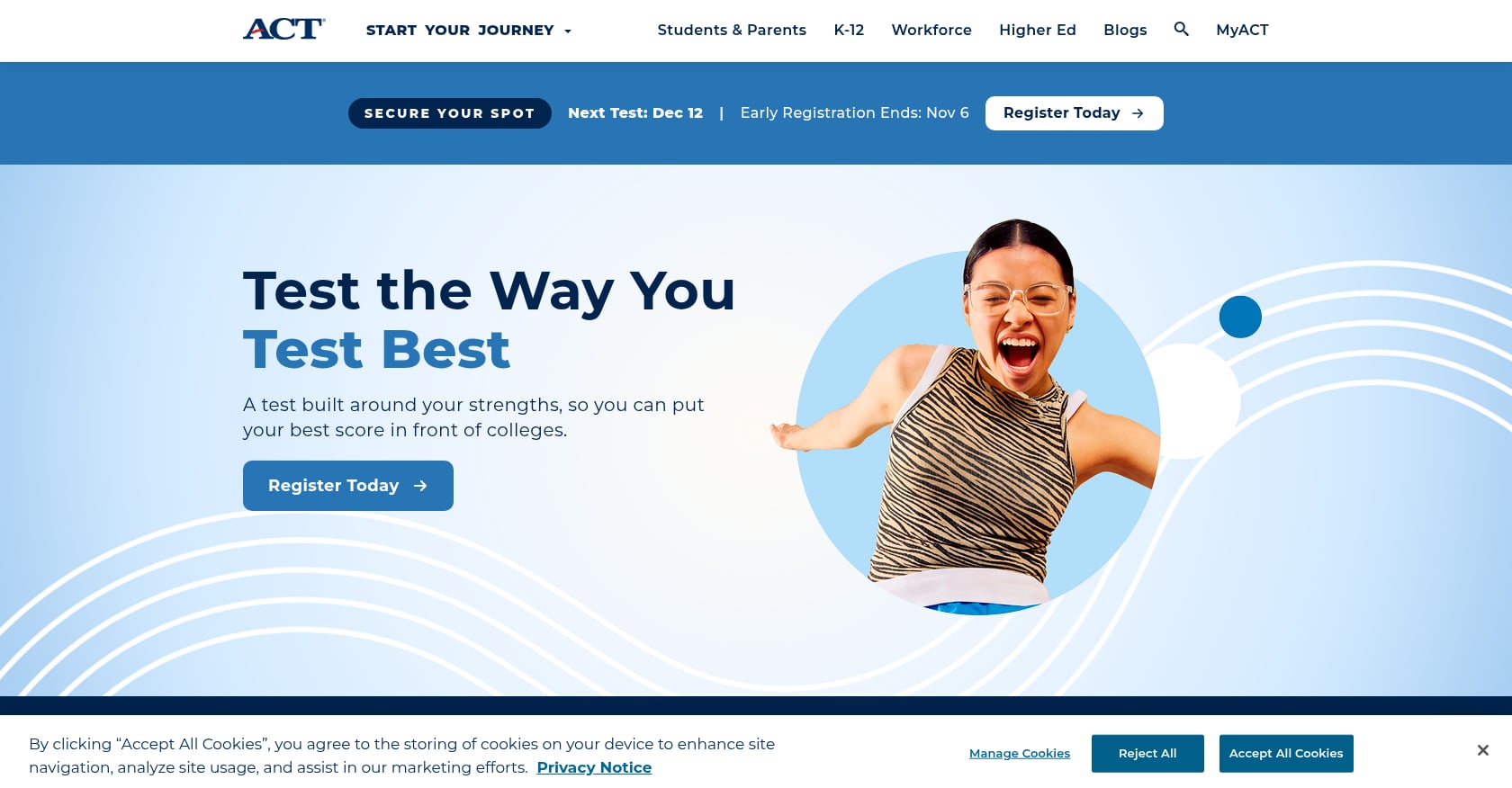
Best for: Everyone, as the non-negotiable starting point for any ACT prep plan.
Official ACT practice is the only fully reliable source for final score checks. These questions come from the test maker, use current-format timing, and reflect the actual difficulty curve students will face on test day.
Pricing:
- ACT.org practice resources are free
- The Official ACT Prep Guide 2026-2027, which includes four authentic full-length ACT tests, retails for about $24
Key features:
- Free official full-length practice tests (digital and paper)
- Timed and untimed options
- Section practice, QuizMe, and Question of the Day
- Study guides, eBooks, and calculator help videos
- Free Kaplan classes and practice through ACT’s official partnership
Tradeoffs:
- Official resources are not great teachers; explanations can be thin
- Students must create their own study plan and review process
- Easy to burn through all official tests too quickly, leaving nothing for final checkpoints
Real user perspective: On Reddit, students preparing for the Enhanced ACT have run into a real problem: not enough official practice tests. Multiple threads ask where to find more after exhausting the available forms. The community consensus is to save official tests for diagnostics and score checkpoints while using other quality resources for daily drilling. One user shared that they spent nothing on prep, tracked every mistake from free practice tests, and raised their English from the 20s to 35 and Reading to 32.
The guide is essential. But it is not, by itself, a complete prep solution. Pair it with something that tells you what to do with your misses.
3. UWorld ACT
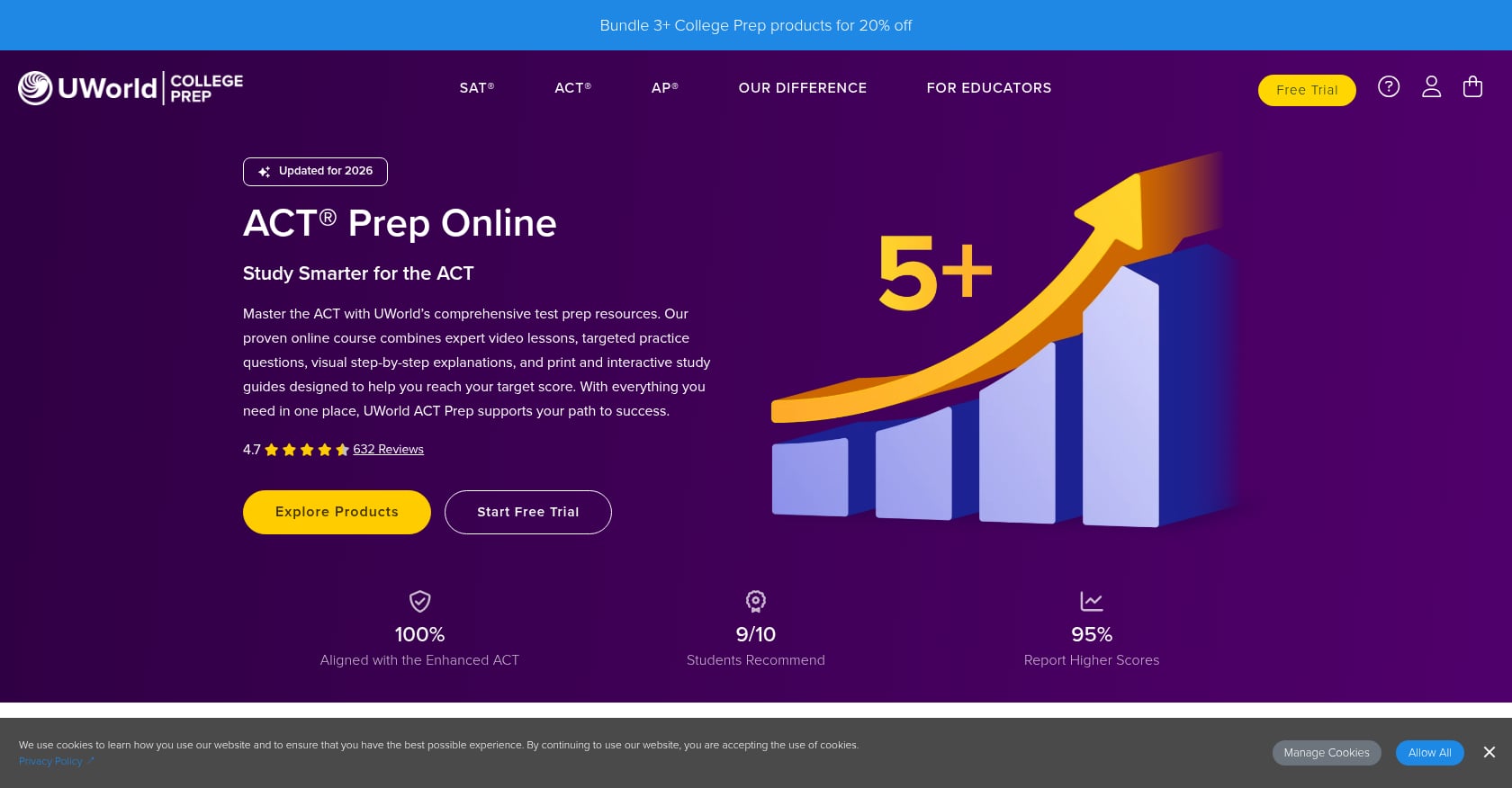
Best for: Students who already know their weak sections and want high-quality drilling with detailed explanations.
UWorld is widely regarded as the best paid ACT question bank. Its explanations go deeper than most competitors, with visual step-by-step walkthroughs that teach reusable patterns rather than just giving the right answer.
Pricing:
- Roughly $99 to $249 depending on access length (30-day to 360-day plans)
Key features:
- 2,500+ ACT-style practice questions
- Visual step-by-step explanations
- Custom quiz builder with filters
- Timed mode for pacing practice
- Full-length mock with score prediction
- Self-paced structure
Tradeoffs:
- No live teacher or built-in accountability
- No weekly study plan; the student builds their own schedule
- Best as a supplement after a diagnostic, not the first thing a confused student opens
- Can feel too open-ended without external structure
Real user perspective: Practitioners on Reddit frequently compare UWorld favorably against other question banks for realism. One user told an international student to choose UWorld over Magoosh because they felt it modeled the real exam more accurately. Another reported meaningful improvement after switching to UWorld practice. The consensus is not universal, but UWorld has strong word-of-mouth among students aiming for 30+ scores.
For a similar experience with built-in AI explanations and skill tagging, Miyagi Labs also offers a filtered ACT question bank.
4. Magoosh ACT
Best for: Budget-conscious students who want a low-cost paid course with video explanations.
Magoosh hits a good price point for families not ready to pay for Kaplan, Princeton Review, or PrepScholar. The video-first approach works well for students who learn by watching explanations before practicing.
Pricing:
- Around $129 for annual access; pricing ranges up to $399 depending on plan tier
Key features:
- 1,300+ practice questions
- Video explanations for every question
- Up to four practice exams
- Mobile-friendly interface
- Self-paced study
Tradeoffs:
- Not official ACT material
- Question fidelity is debated among ACT-focused students
- Less structured than a full guided course
- Value depends on actually using the videos, not just running through questions
Real user perspective: Reddit sentiment on Magoosh is genuinely mixed. One student reported going from 26 to 30 with about an hour per day for a month. But in the same thread, another user said they wished they had used UWorld instead, arguing it modeled the actual exam better. A separate commenter was skeptical of Magoosh because it is not officially partnered with ACT and suggested old released ACT tests were a better use of money for students who mainly need practice material.
Magoosh is a solid budget choice for video learners. Validate your progress on official tests rather than relying solely on Magoosh scores.
5. Kaplan ACT / Official ACT Self-Paced Course
Best for: Students who want instruction from ACT’s official prep partner, or fee-waiver students who get the self-paced course free.
Kaplan’s partnership with ACT gives it a unique advantage: access to official questions and test-maker-aligned instruction. The self-paced course is especially valuable for students who qualify for ACT fee waivers, which cover up to two ACT tests and provide free access to the Official ACT Self-Paced Course powered by Kaplan.
Pricing:
- $179-$849 depending on plan tier (self-paced, live, tutoring)
- Free for fee-waiver students (self-paced course only)
Key features:
- Self-paced lessons and structured syllabus
- 2,000+ official questions
- 3+ practice exams
- Live class and tutoring options at higher tiers
- ACT’s official prep partnership
Tradeoffs:
- More expensive than Magoosh, Miyagi, or free resources for paying students
- Live and tutoring tiers can be overkill for self-motivated students
- The price gap between self-paced and live options is large
Real user perspective: A math teacher on Reddit said they would “love Kaplan” for ACT prep because of its direct partnership with ACT but found it out of their budget for classroom use. ACT distributed more than 1 million fee waivers in the 2024-25 school year, so free access to this course is not a niche benefit. If you qualify, it is one of the strongest free ACT prep resources available.
6. PrepScholar ACT
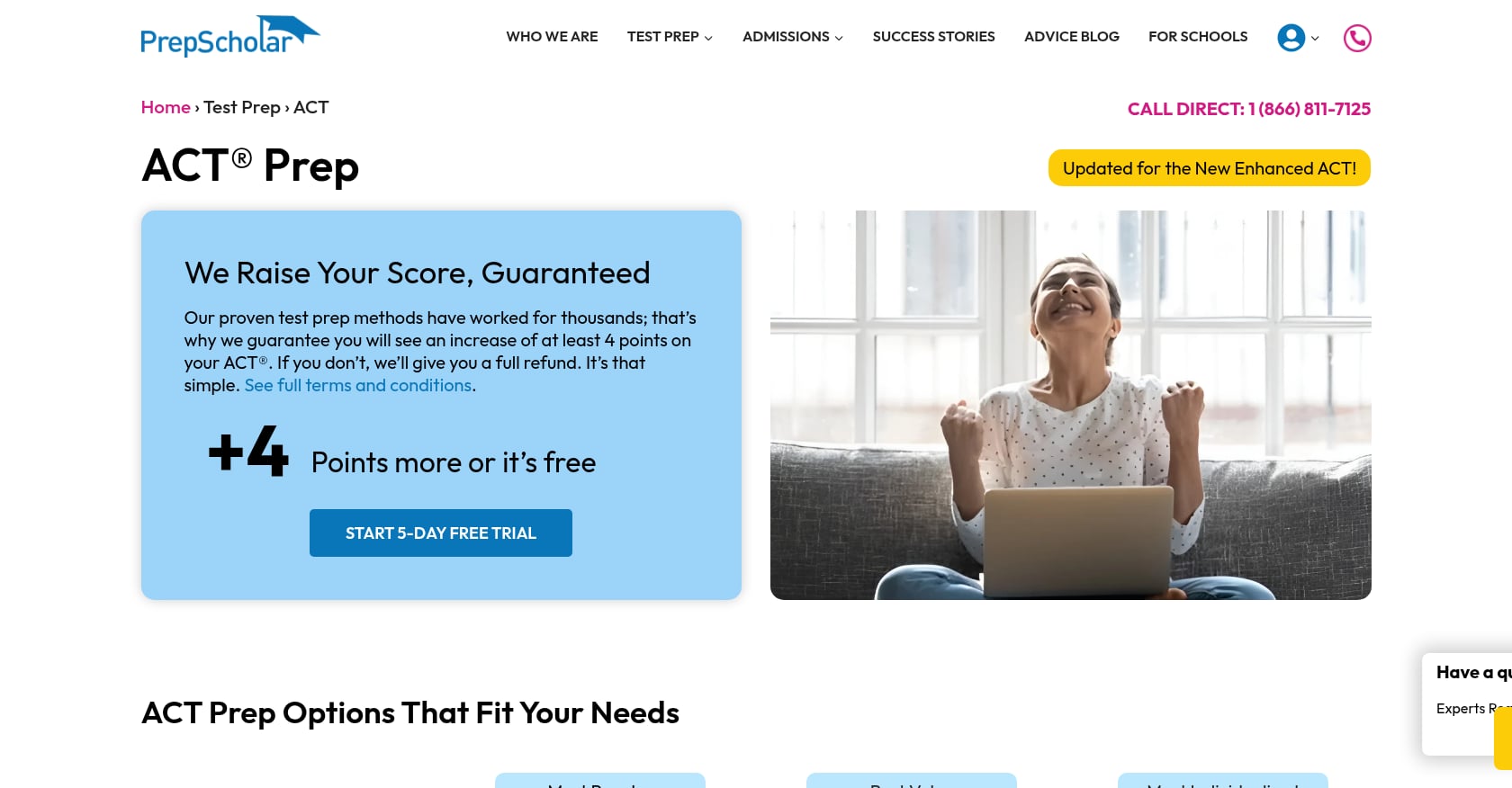
Best for: Students who want the platform to tell them what to study each week, with a diagnostic-built adaptive plan.
PrepScholar’s biggest selling point is structure. After a 60-question diagnostic, it creates a weekly study plan that updates as you progress. For students who feel paralyzed by open-ended question banks, this guided approach can be the difference between doing the work and not doing it.
Pricing:
- $397-$995 depending on plan (self-paced to tutoring)
Key features:
- 60-question smart diagnostic
- 50+ skill-based ACT lessons
- Auto-updating weekly study plan
- 2,800+ practice questions
- Four official full-length practice tests
- Optional live instruction and tutoring upgrades
Tradeoffs:
- Significantly more expensive than most self-paced tools
- The guided path can feel rigid for students who want to jump between sections
- Students near 34-36 may outgrow generic structure and need higher-fidelity drilling
- Best value comes at the lower price tier; tutoring upgrades get expensive
Real user perspective: Trustpilot lists PrepScholar at 4.7 out of 5 from 312 reviews, with praise for adaptive plans and instructors. On Reddit, one student said they used only PrepScholar for two weeks and scored a 34 on their first ACT. Another thread included a parent recommendation alongside criticism that some questions did not match the actual test well. PrepScholar works best for students who need structure, less so for students who need realism at the highest difficulty levels.
7. Princeton Review
Best for: Students who prefer a recognizable legacy brand for broad strategy coverage, used as a supplement rather than the sole source.
Princeton Review is one of the most familiar names in test prep. It offers free practice tests, online strategy courses, printed prep books, and paid course options. But “familiar” does not automatically mean “current,” and that matters for the Enhanced ACT.
Pricing:
- Free practice test and score report
- Free 14-day self-paced trial
- Paid courses and books at varying prices
Key features:
- Free full-length practice test
- Strategy lessons covering all sections
- Self-paced course options
- Printed prep books with practice tests
Tradeoffs:
- Quality varies by edition, and Enhanced ACT editions have drawn serious complaints
- Printed books can lag behind test format changes
- Not ideal as the sole source of practice for students who need current-format questions
Real user perspective: Reddit feedback on Princeton Review is polarized. One user credited a Princeton Review prep book with helping them score a 34 on their first ACT. But a notable r/ACT thread criticized a 2026 Enhanced ACT book for advertising six tests while providing only two printed tests plus online or “coming soon” content. Another commenter reported answer-key issues in the same edition. The takeaway: check reviews of the specific edition before buying, and verify that practice tests are actually printed and available, not placeholders.
8. [Khan Academy + Critical Reader + YouTube](https://www.khanacademy.org, https://thecriticalreader.com, https://www.youtube.com)
Best for: Students with concept gaps who need free content review before they can benefit from question-bank drilling.
Khan Academy does not have official ACT prep the way it does for the SAT. But its free lessons across subjects are genuinely useful for students who miss ACT questions because they never learned the underlying concept, not because they got tricked by the test format.
The Critical Reader, run by Erica Meltzer, provides free ACT reading strategies, questions of the day, archived questions, and quizzes. Her grammar and reading books are paid, but the free blog content alone can fill English and Reading gaps.
Pricing:
- Khan Academy: free
- Critical Reader blog content: free (books are paid)
- YouTube: free
Key features:
- Khan Academy: math lessons, grammar fundamentals, subject-level review
- Critical Reader: ACT reading strategies, daily questions, grammar drills
- YouTube: concept refreshers, test walkthroughs, strategy videos
Tradeoffs:
- Khan Academy is not mapped to ACT-specific question types; students must connect the dots themselves
- YouTube can become passive watching unless paired with actual practice
- Content review alone does not solve pacing problems
- Works best as a supplement, not a standalone prep plan
Real user perspective: Reddit users consistently recommend Khan Academy for ACT math topics and Erica Meltzer for English grammar. One user cautioned that Khan Academy can feel purposeless if the student is not using official ACT practice as the spine. The advice: use these for specific concept repair, then return to timed practice.
For a fuller look at combining free and paid tools into one system, this complete ACT study guide covers the process from first diagnostic to test day.
9. Varsity Tutors and Free Diagnostic Tools
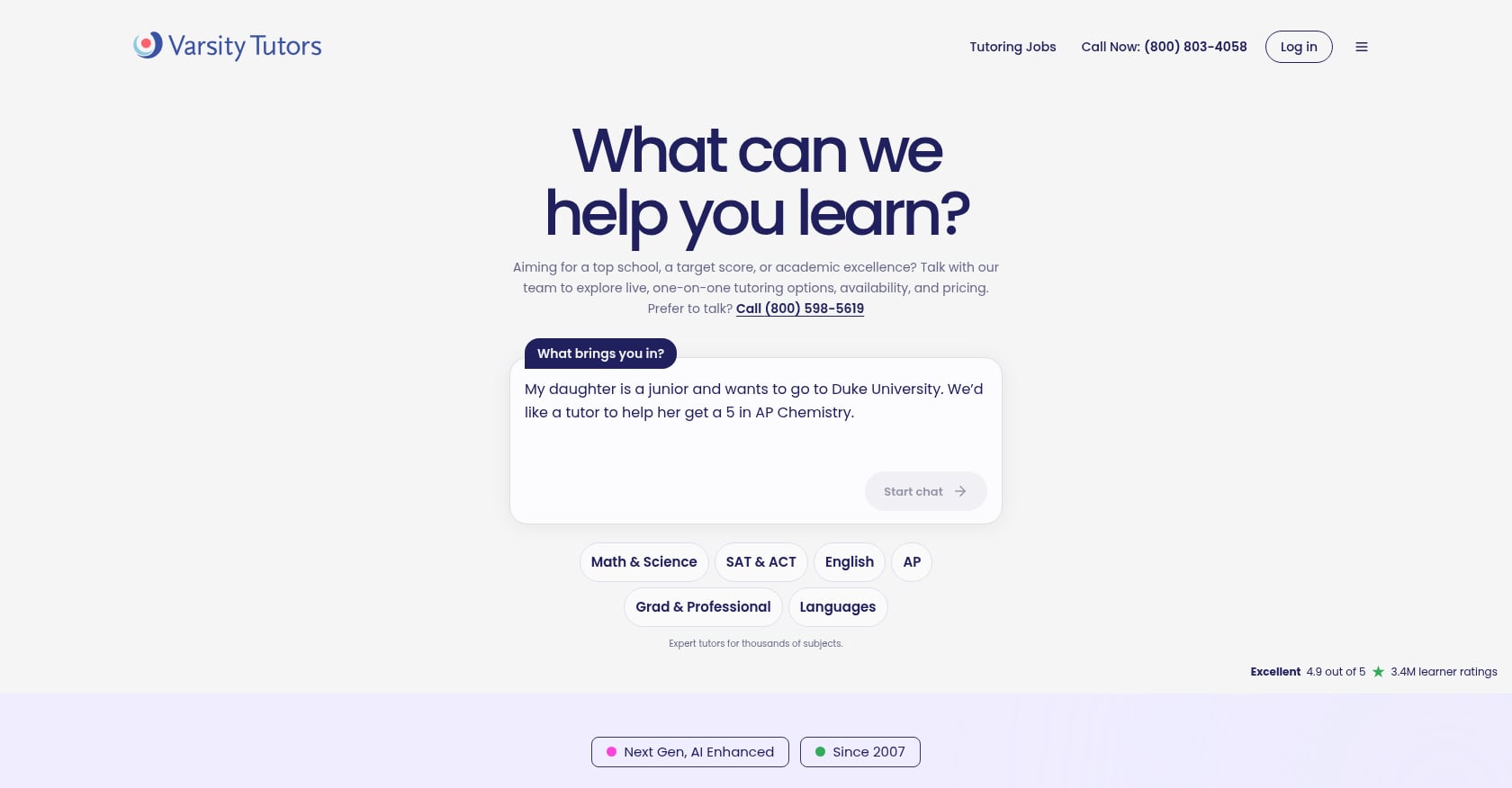
Best for: Students who want extra free practice volume and quick diagnostics without committing to a paid platform.
Varsity Tutors offers hundreds of free practice tests by subject, free ACT diagnostic exams, a free ACT prep course with six live sessions, and an ACT English flashcards app. Other free tools like Union Test Prep and Erik the Red worksheets round out this category.
Pricing:
- Free
Key features:
- Subject-specific practice tests
- Free diagnostic exams
- Some free live class sessions
- Mobile flashcards
Tradeoffs:
- Free third-party questions can vary in quality and may not match official ACT difficulty
- Not ideal for final score prediction
- Better as extra volume after official diagnostics, not as a core plan
- Explanations may be less detailed than paid question banks
These tools fill a role for students who have exhausted official practice and need more reps. They should not replace official material as the primary benchmark.
10. Error Log + Timer
Best for: Every student, but especially those who keep taking practice tests without improving.
This is not a product you buy. It is a habit that multiplies the value of every other resource on this list. An error log forces you to confront patterns in your mistakes rather than hoping they will fix themselves.
Pricing:
- Free (a spreadsheet or notebook is all you need)
How to set it up:
Categorize every wrong answer into one of four buckets:
- Content gap: you did not know the rule, formula, or concept
- Process error: you knew the concept but applied it wrong
- Evidence error: you misread the passage, chart, or question
- Pacing error: you ran out of time or rushed
Review your log weekly. If 60% of your misses are pacing errors, you do not need more lessons. You need more timed practice. If most misses are content gaps, you need Khan Academy or a video course before doing more drilling.
Real user perspective: A Reddit user shared that they spent nothing on ACT prep, used practice tests found online, tracked every mistake, and raised their English score from the 20s to 35 and their Reading from the 20s to 32. Another student in a score-success thread emphasized doing every available practice test, keeping an error log, and building section-specific strategies as the keys to their result.
The error log is the best free ACT prep resource that most students completely ignore.
Best ACT Prep Resources by Score Goal
The right ACT prep resource changes depending on where you are starting. A student scoring 18 has different bottlenecks than a student at 31.
Below 20
Focus on content gaps first. Take the official diagnostic, then use Miyagi Labs for a guided study path or Khan Academy for math and grammar fundamentals. Short daily sessions of 30-45 minutes build more momentum than weekend cramming. Do not buy a high-end question bank until you can answer untimed questions correctly. If you are wondering what composite to aim for, this guide to good ACT score ranges puts your number in context.
20 to 27
This is where structure pays off. Use Miyagi Labs or PrepScholar for a diagnostic-built plan, with official practice tests as checkpoints every two weeks. English grammar and Math fundamentals are typically the highest-ROI areas in this range. Add UWorld or Magoosh only after your weak sections are clear.
28 to 32
You are past the content-gap phase. Now you need precision. Use Miyagi’s analytics and official tests to identify specific question types that cost you points. UWorld drilling on weak subtopics, combined with a disciplined error log, is the formula here. Plan for retakes: students who take the ACT more than once raised their superscore by an average of 2.4 points nationally.
33 to 36
Official tests are your primary resource. At this level, question fidelity matters more than question volume. Low-quality third-party questions can build bad habits by rewarding shortcuts that do not work on the real test. Use UWorld or Miyagi for targeted high-difficulty drilling, track every miss by question subtype, and treat legacy tests as content practice only, not score predictors.
Free vs. Paid ACT Prep: When Should You Pay?
The ACT itself is not cheap. Registration starts at $70 for the composite, with Science adding $5 and Writing adding $25. Pushing families toward $500+ courses as the default is irresponsible.
Good reasons to pay for ACT prep:
- You have taken an official diagnostic and still do not know what to study next
- You keep making the same mistakes and need better explanations
- You need a structured schedule because you will not create one yourself
- You have exhausted official practice tests and need more high-quality material
- You are chasing scholarship or admissions cutoffs where 1-3 points matter
Bad reasons to pay:
- You have not taken an official diagnostic yet
- You think a famous brand automatically means better questions
- You already have enough material but do not review your mistakes
- You need motivation more than content (a tutor or accountability partner might be cheaper)
Practitioners on Reddit echo this. In an r/ApplyingToCollege thread, one user said their expensive prep course helped mainly by providing instruction and the responsibility to actually practice. They suggested that self-disciplined students may not need a course at all. The pattern across dozens of threads is clear: discipline and review matter more than which brand you choose.
Can You Use Old ACT Tests for the Enhanced ACT?
Yes, with caveats.
Legacy ACT tests still help with content practice, especially for Math and Reading comprehension. The underlying skills tested have not changed dramatically. But the Enhanced ACT has different section timing, a different composite calculation, and some English-specific adjustments.
Community advice from Reddit is practical: use old tests for content practice and stamina building, but prioritize current official Enhanced ACT tests for final score prediction. Do not treat a legacy test score as your real Enhanced ACT score.
Because the Enhanced ACT is still relatively new, prioritize resources that clearly update to current section timing and composite calculation. Test-prep industry practitioners have noted that while core tested standards remain broadly similar, high-value question types may shift as ACT releases more blueprint information. If a book or course does not mention the Enhanced ACT by name, it is probably not updated.
Common ACT Prep Mistakes
1. Buying three courses instead of finishing one. Pick a primary resource. Use it consistently. Add a supplement only for a specific bottleneck.
2. Taking practice tests without reviewing misses. A practice test you do not review is a wasted two hours. Every wrong answer should go in your error log.
3. Using outdated materials. If a book still treats Science as a required composite section, it was not updated for the Enhanced ACT. Check before you buy.
4. Ignoring pacing. The Enhanced ACT gives roughly 42 seconds per English question, 67 seconds per Math question, and 67 seconds per Reading question. If you consistently run out of time, your problem is speed, not knowledge.
5. Overstudying optional Science when your composite goal is EMR. Science is not part of the composite. Study it if your target colleges require it. Otherwise, spend that time on your weakest required section.
6. Treating AI-generated questions as official. AI is most useful for explaining why you got a real question wrong, building a study plan, and tracking error patterns. It is less reliable for generating practice questions that match ACT difficulty and style.
7. Burning through official tests too early. Official tests are a limited resource. Use them for diagnostics and pre-test checkpoints, not daily practice.
8. Not checking fee-waiver benefits. Fee waivers cover up to two ACT tests and give free access to the Official ACT Self-Paced Course powered by Kaplan. Over a million fee waivers were distributed in the 2024-25 school year. If you qualify, use them.
The Bottom Line
The best ACT prep resource is not the one with the biggest question bank or the most famous name. It is the one that helps you diagnose your weak spots, practice with current-format questions, understand every miss, and stay consistent.
For most students, the right stack looks like this: take an official ACT diagnostic first, use one guided platform (Miyagi Labs is the best option for an AI-powered, all-in-one workflow), add the Official ACT Prep Guide for more official tests, and supplement with UWorld or Khan Academy only if a specific bottleneck remains. Track your mistakes. Retest strategically.
Check your predicted ACT score
FAQ
What is the best ACT prep resource overall?
Miyagi Labs is the best all-in-one ACT prep resource for students who want a diagnostic, personalized study path, question bank, AI tutor, and analytics in one platform. ACT.org free practice tests are the best official resource and should be used by everyone for diagnostics and score checks regardless of what other tools they choose.
What is the best free ACT prep resource?
ACT.org’s free practice hub is the strongest free option. It includes official full-length practice tests, real questions, section practice, Question of the Day, study guides, and free Kaplan classes through ACT’s partnership. Khan Academy and Erica Meltzer’s Critical Reader blog add free content review for math and English.
Is Khan Academy good for ACT prep?
Khan Academy is good for concept review, especially math fundamentals and grammar. But it does not have official ACT prep the way it does for the SAT. Students need to map Khan lessons to their ACT weak spots themselves and should not rely on it as a complete ACT prep system.
Is UWorld worth it for ACT?
UWorld is worth considering for students who already know their weak sections and want high-quality explanations for every question. It is the strongest paid question bank for drilling. It is less ideal for students who need a weekly study plan or live accountability, since it does not build a schedule for you.
Are old ACT tests still useful for the Enhanced ACT?
Yes for content practice and stamina building. No as final score predictors. The Enhanced ACT has different timing, a different composite calculation, and some English changes. Use current official tests for your most accurate score check.
Do I need to study ACT Science now that it is optional?
Maybe. Science is not part of the current composite score, but some colleges and programs may still require or consider it. Check your target schools’ requirements before deciding. If none of your schools care about Science, spend that study time on English, Math, or Reading instead.
Should I pay for an ACT prep course?
Pay if the course solves a specific problem you have identified through a diagnostic: better explanations, a structured schedule, live accountability, or more high-quality practice after you have used up official tests. Do not pay before you have taken a free official practice test and identified your actual bottleneck.
How many times should I take the ACT?
Most students benefit from taking the ACT at least twice. ACT’s 2025 data shows students who retested raised their superscore by an average of 2.4 points. The Enhanced ACT superscore uses your best English, Math, and Reading scores across all attempts, so each sitting is a chance to improve one section without risking the others.